Review & Mid-Term Quiz


Announcements


1

 Beyond the Sounds of Silence. Latin-American Artists Connecting Sound, Art, and Society

https://www.lowe.miami.edu/exhibitions/current-upcoming/index.html
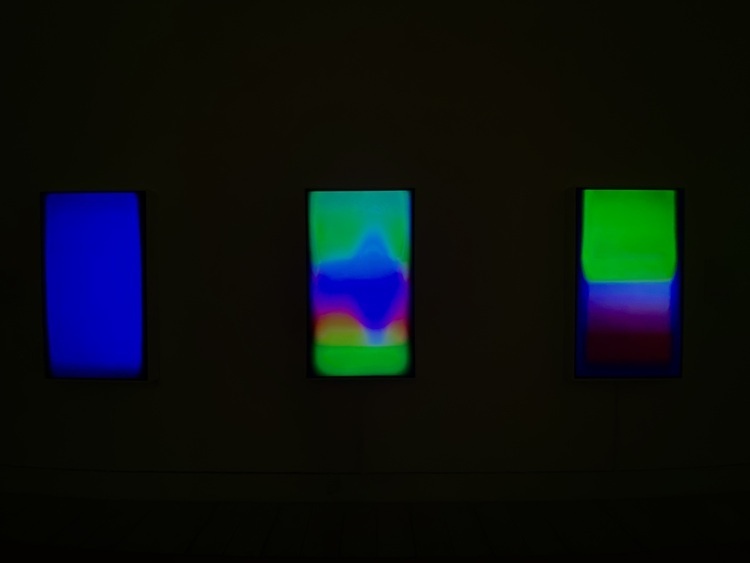
 

Live Performances by sound artists from Beyond the Sounds of Silence

Lowe Art Museum
1301 Stanford Dr, Coral Gables, FL 33146

Beyond the Sounds of Silence: Latin American Artists Connecting Art, Sound and Society Closing Event featuring live Performances by sound artists Gustavo Matamoros and Richard Gare

 2


 Spontaneous Performance Works

Maria Schneider, a Grammy award winning jazz composer, is coming to campus next month for a week-long residency with the students in the HMI at the Frost School of Music. Maria has a love of working with dancers and musicians improvising together to create new spontaneous performance works.  She would like to do another dance/music improvisation workshop Monday, October 17 from 7:10-8:10pm. We have done this before the pandemic. What we did was pair one musician with one dancer, each inspiring each other to move and play together. If you are interested in being a part of this event, please let me know.


 -----------------------------

 Review


I

Concepts Developed by Rudolff Laban
 
Choreutics: Laban defined choreutics as “the practical study of harmonized movement.” Latter day colleagues of Laban’s, such as Valerie Preston-Dunlop and Vera Maletic, have delineated Choreutics respectively as the “spatial organization for dance” and “the theory and practice of ordering movement in space.”
 
Kinesphere“the sphere around the body whose periphery can be reached by easily extended limbs without stepping away from that place which is the point of support when standing on one foot” (1966, p.10). This spherical space around our body shifts as soon as we shift our weight. It is also the first area of movement exploration before going into “space in general”. It follows anatomical limitations, being actually more elliptic than spherical as constitutionally, the average body has a wider area of reach forward than backward.

kinesphere

Visibly speaking the kinesphere stays invisible until the moment we move within it and make it tangible by leaving our trace-forms, the spatial consequences of our movements (Preston-Dunlop, 1981, p.27).

 
Trace-forms: As an analytical study, choreutics delineates the natural paths that the limbs of the body trace on the space around the body. Laban calls these paths “trace-forms.”
 
Harmonic” Three-dimensional Patterns: Laban’s space harmony scales are similar. Laban has taken the curves of natural movements and geometricized them, creating “harmonic” three-dimensional patterns.

Breath Connectivity: Deliberately bringing your awareness to your breath as support for your movement is a precursor to whole-body coordination and virtuosity in movement. This is true for movers of all levels as breath allows the entire body to be supported from within in complex coordination.

Patterns of Body Connection:  With knowledge of Laban's concepts, Peggy Hackney identified six developmental patterns of body connectivity: breath, core-distal, head-tail, upper-lower, body- half, and cross-lateral.

Laban's Cube: Thee kinesphere is also the container of a cube (containing all diagonal directions and dimensions) and of an icosahedron made by three bi-dimensional planes: it contains angular geometry inside a round geometry.


Laban’s Four Components of Human Movement with their Respective Elements
•Direction – direct/indirect
•Weight – heavy/light
•Speed – quick/sustained
•Flow – bound / free


Laban’s Eight Effort Actions  

The Eight Effort Actions help clients both physically and emotionally to embody and understand internal impulse while developing an expressive body. 
•Wring:
•Press
•Flick
•Dab
•Glide
•Float
•Punch
•Slash
 
------------------------
 
II
 
 
Expressionist Dance

Expressionist dance was expressive, and show more spirit and emotion and less virtuosity. The dance would be improvisational, uninhibited and provocative. Future spiritual and bodily reform movements expressed themselves in a new "natural" dance.

Schools for expressionist dance had special philosophies and emphases for dance, such as naturalness, breathing, tension / relaxation etc. It was often associated with floor contact, "weight" of dance movements, and experiments with music. Body and physicality were strongly emphasized. 

Mary Wigman

She worked upon a technique based on contrasts of movement; expansion and contraction, pulling and pushing.


 Her technique is structured in five main groups:

1 - Striding and sliding

2 - Springs, vibrations and bouncing

3 - Momentum and oscillations

4 - Falling and dropping (floor technique)

5 - Tensions: relaxed, sustained and motor tensions


III


1. Which ideas created by Rudolph Laban are important for dance?

2. Which cultural movement influenced Laban's movement ideas? Why?

3. What was the main difference between Mary Wigman's approach to dance and Laban's approach?

4. Why was Wigman's dance expressionist?
 
5. Why was Kurt Jooss' piece The Green Table an important piece in the evolution of modern dance? (See the videos bellow).


6. In which way have these dance/movement styles influenced your own dance abilities? 

 7. List the phrases we have put together so far, both, for your ensemble piece and your solo piece.
 
8. Briefly reflect on your performance in this class by writing about your takeaways in terms of body movement, expression and relationships. 
 
 
IV
 
 
Reviewing Solo & Ensemble Phrases (4 phrases each)

Comments

Popular posts from this blog

Harmonic Three Dimentional Patterns

The Music